Thesis
Vein Pulse and Painkiller is an interactive sound experience about the relationship between how we come to know ideas through artistic forms and how we understand our own existence through them.
Abstract
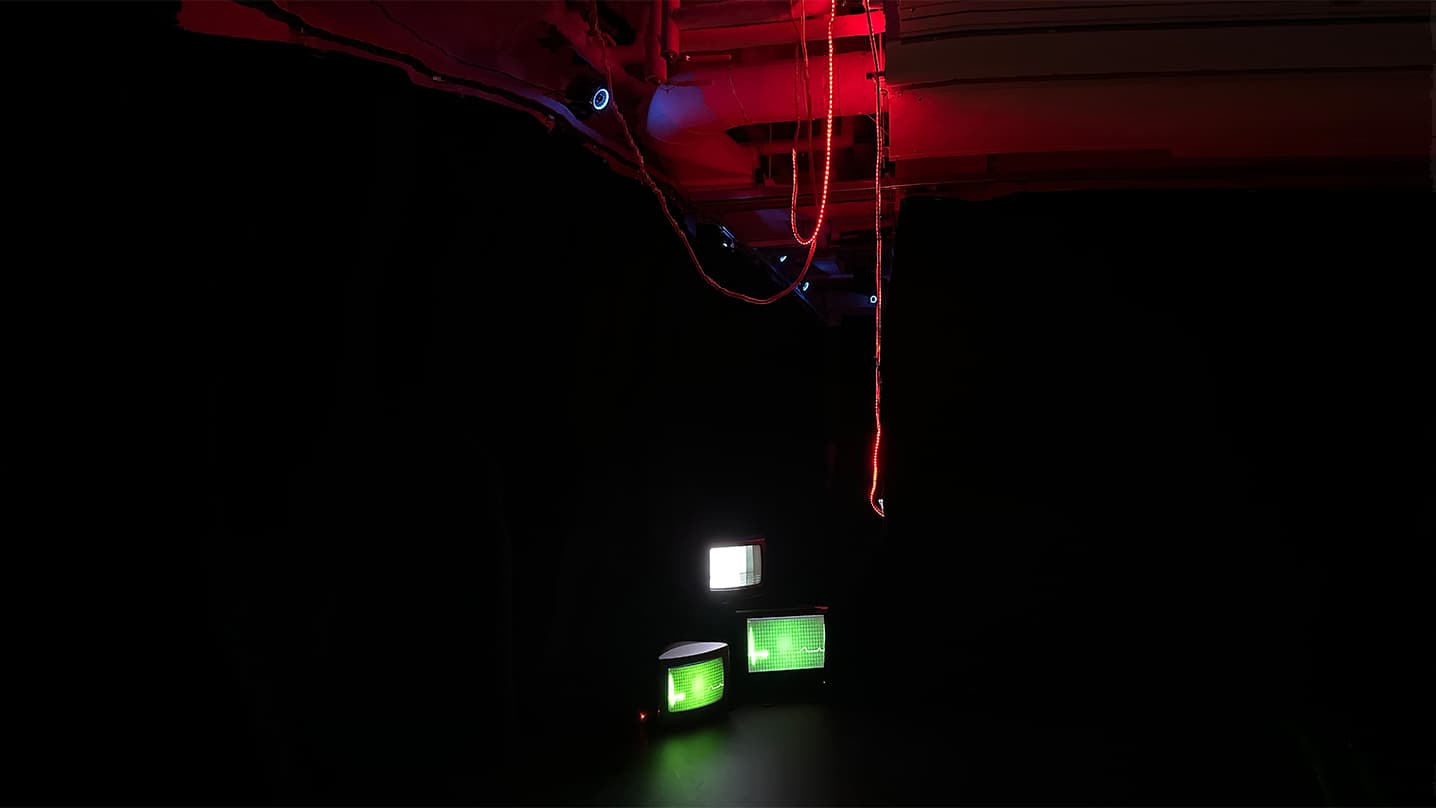
The audience is invited to step into the work. When you place your finger on the sensor — when you connect yourself to the veins, and watch your blood pulse through them while the sound of death keeps playing in the room — what does it make you feel?
Do you feel confused? Do you feel that your existence is being denied? Do you struggle, do you strive, do you try to get out? Do you still feel that the essence of your existence is defined by your heartbeat, your pulse, your blood, your vitals? Is the result what you expected? Are you satisfied?
And finally, as the LED strips begin to move and the music plays — do you feel alive? Do you see life? Do you feel rescued? When you walk away from the installation, do these questions still tangle?
Research
In The World as Will and Representation (1844), the German philosopher Arthur Schopenhauer argues that music — exclusive as it is among the arts — is "the panacea for all of our suffering." The question the piece takes from him is simple: what is it about music that sets it apart from every other art form, that allows it to liberate us, even briefly, from the horrors of existence?
In every age, people have played music without being able to give an account of it: content with an immediate understanding of music, people did without an abstract conceptualization of this immediate understanding.
For Schopenhauer, music is by no means a copy of the ideas — it is a copy of the will itself. That is precisely why the effect of music is so much more powerful and urgent than that of the other arts:
The other arts speak only of shadows, while music speaks of the essence.
But what is music as an art form? What does music mean to us, and what do we perceive when we hear it? Stephen John Davies, in Themes in the Philosophy of Music (2005), argues that music is dynamic movement. A single note in isolation is not yet music; but when we hear a sequence of designated sounds, we perceive the motion from one note to another, we discern their relative highness and lowness, and we begin to read music out of them. That movement is not far from the movement of everyday life — opening a can, waving a hand, knocking on a door. Dynamic patterns of relative highness and lowness in space, which can also resonate in music.
Technical Details
A pulse sensor is wired to an LED strip, sending a pulse of light through the strip from the palm of the hand each time it detects a heartbeat.
Multiple gyro sensors are positioned along the LEDs. When they detect movement, they send data to TouchDesigner, which modifies the visual output on the monitors. In parallel, through Max, the same gyro sensors trigger soundtracks in Ableton — so every interaction with the vein simultaneously writes an image and a score.
Videos


