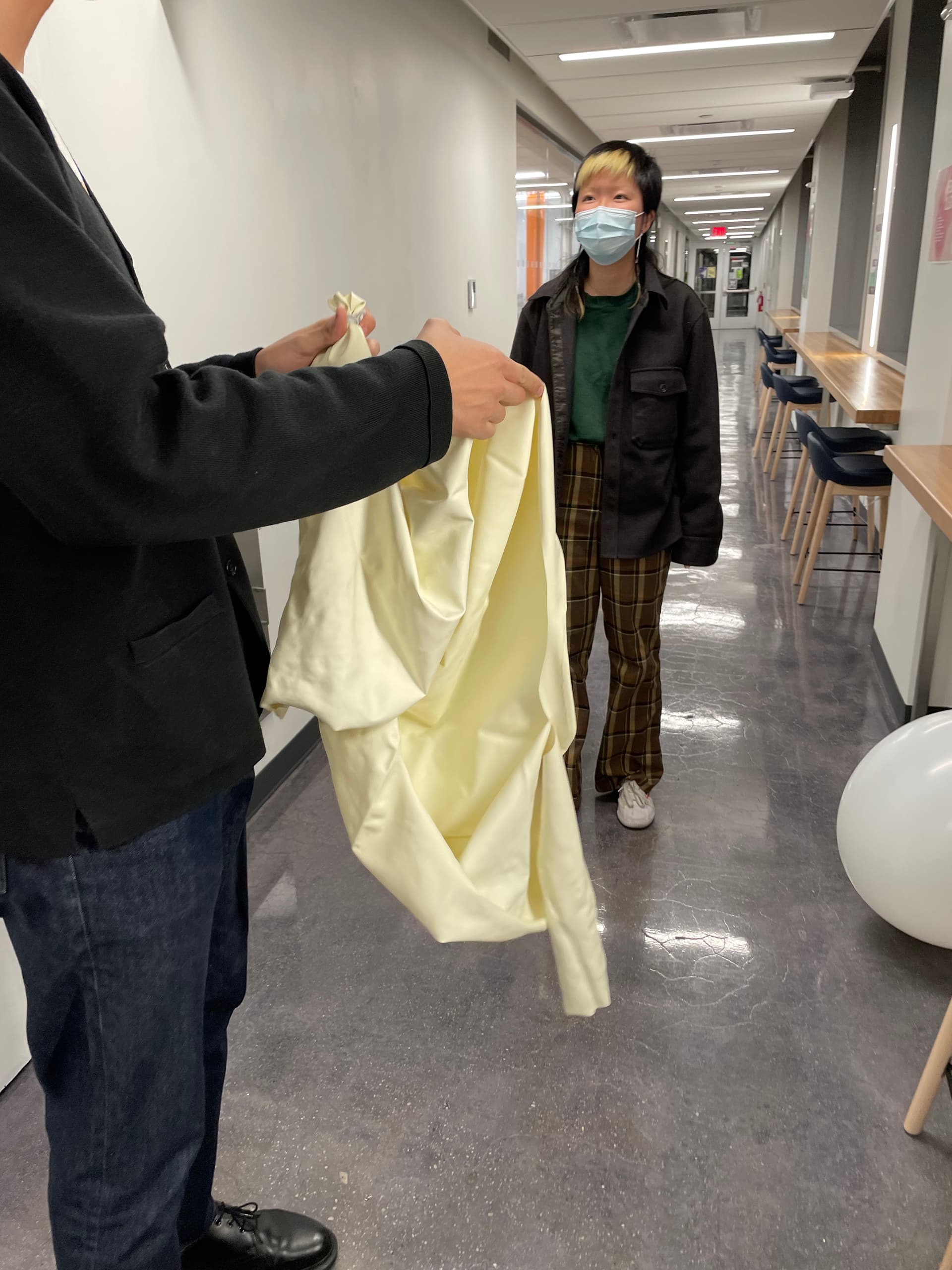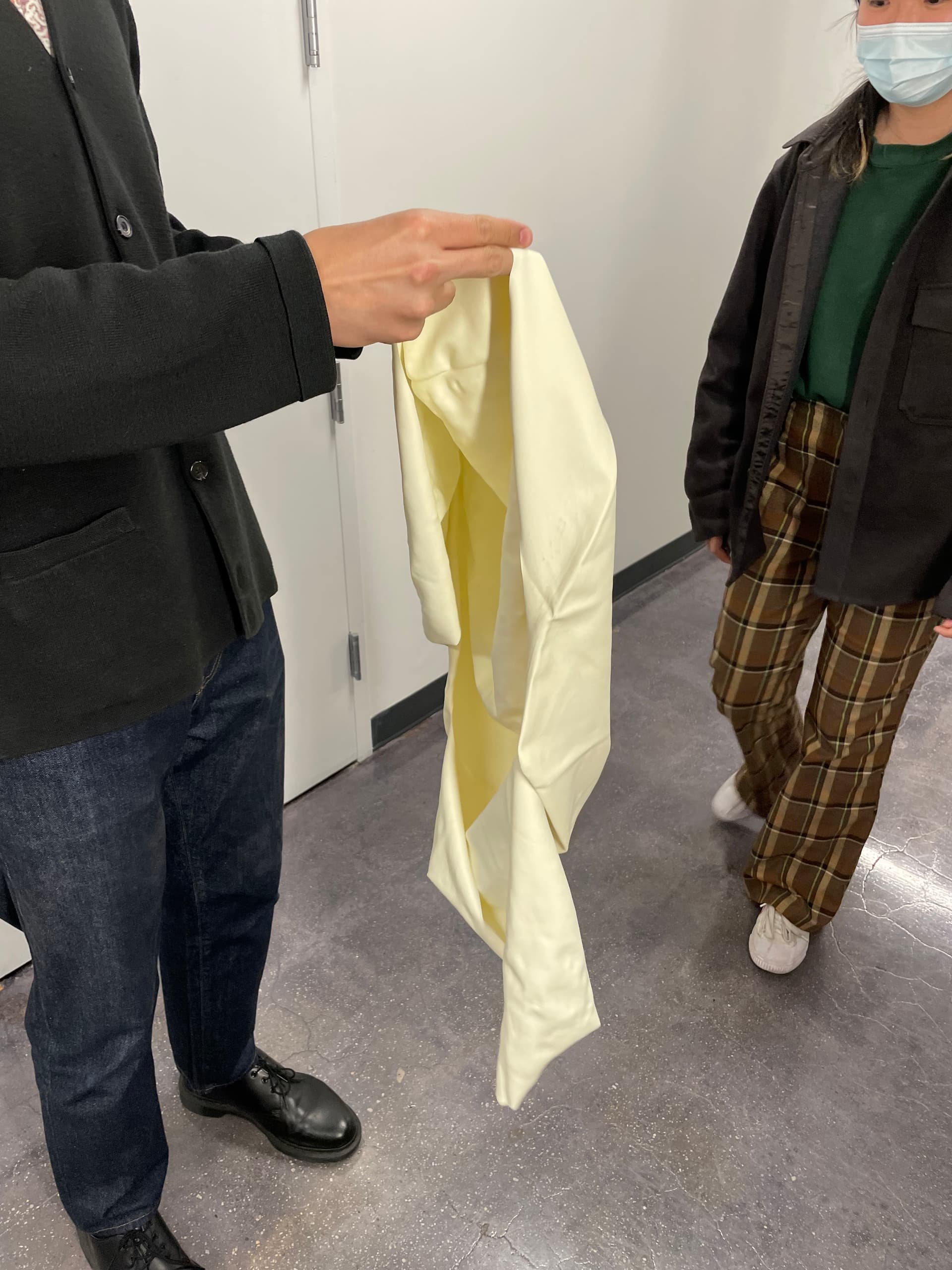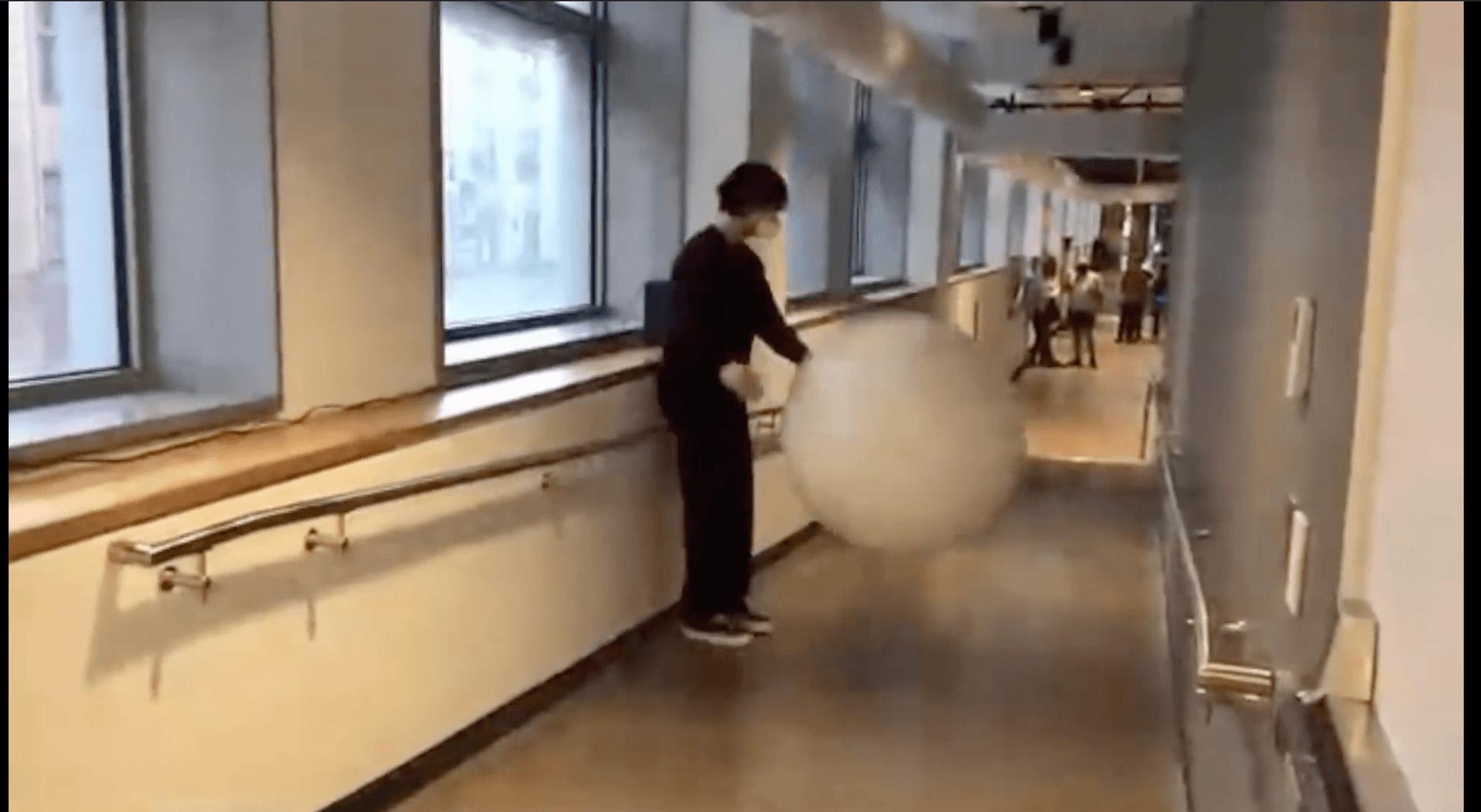
A creative break for interactive ambient music composition. A single balloon hangs in the room, and the audience writes the piece by playing with it.
In collaboration with Kelin Guang and Xiaoyu (Rockey) Ke.
How it plays
When the balloon sits still, a drone loops underneath the room. Gently move it and a chord layers on top; keep moving and the original drone begins to fade. Pat or hit the balloon and a drumbeat enters; keep hitting and more drum tracks stack without displacing the earlier ones. The relative position of the balloon in the space controls the panning of the mix — that part is deliberately unlabelled, something the audience figures out through play.
Process
The technical rig is three layers: an IMU inside the balloon, a wireless bridge, and a Max-to-Ableton pipe that turns movement into music. Each layer was tuned to solve a specific problem — detecting gentle versus sharp motion, avoiding a wired tether to the balloon, and gating sound sources in a way that could be performed reliably in demo.
Sensor
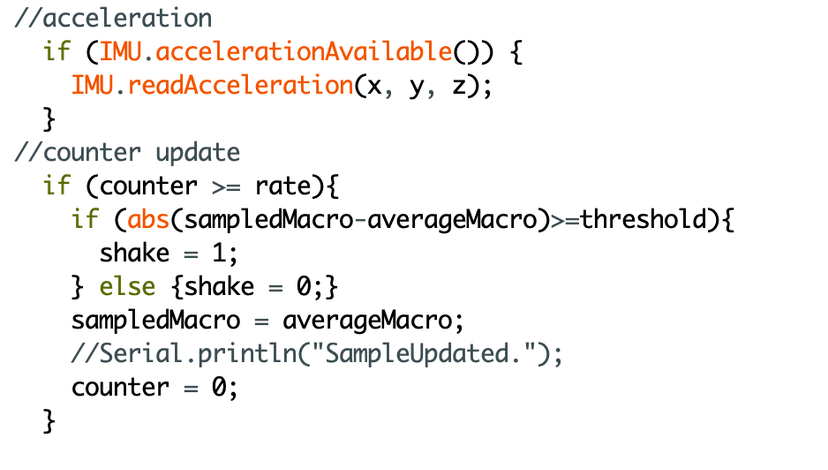
An IMU sensor inside the balloon reads acceleration in all three axes. A gentle change registers as movement; a sharp spike registers as a shake. Both states stream wirelessly out over WiFiNINA using OSC over UDP, so the balloon can float freely without being tethered to the laptop.
Signal chain
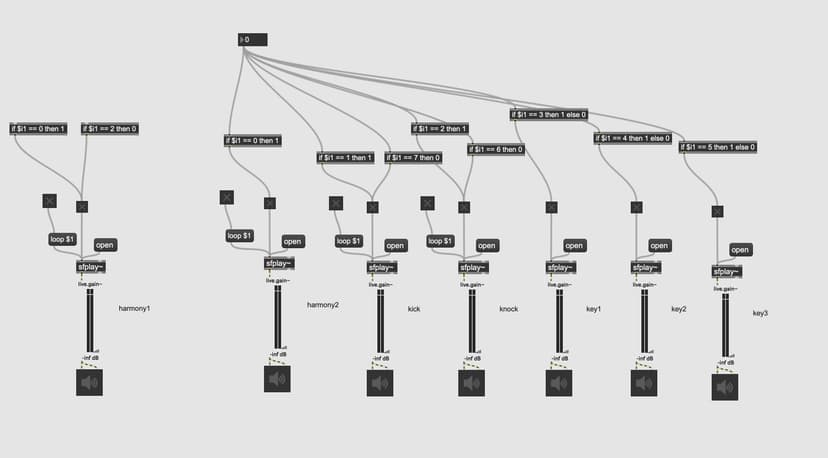
Max listens for the OSC messages and converts them to MIDI via noteout, then forwards that into Ableton through Max for Live. Ableton uses the MIDI notes to pan tracks and to switch which layer plays. In the demo we took a more direct route — Ableton tracks imported straight into Max and gated with if conditions — which made the rig easier to perform with live.
Music
The source material leans on mechanical and incidental sound: white noise, crowd talk, traffic hiss, fragments of commercial voiceover. The goal is to take recognizably artificial textures and use them to compose something that lands as ambient and, somehow, natural.
Initial proposal (and what shifted)
The early concept was a single human-sized balloon, floating, pulled and pushed through the room — a piece about scale and gentle touch. Two things re-shaped it along the way: budget, and the difficulty of keeping a balloon aloft while also carrying a sensor and a battery. The final version works on a smaller object but keeps the core gesture intact: movement drives music, and the room becomes the instrument.
Videos