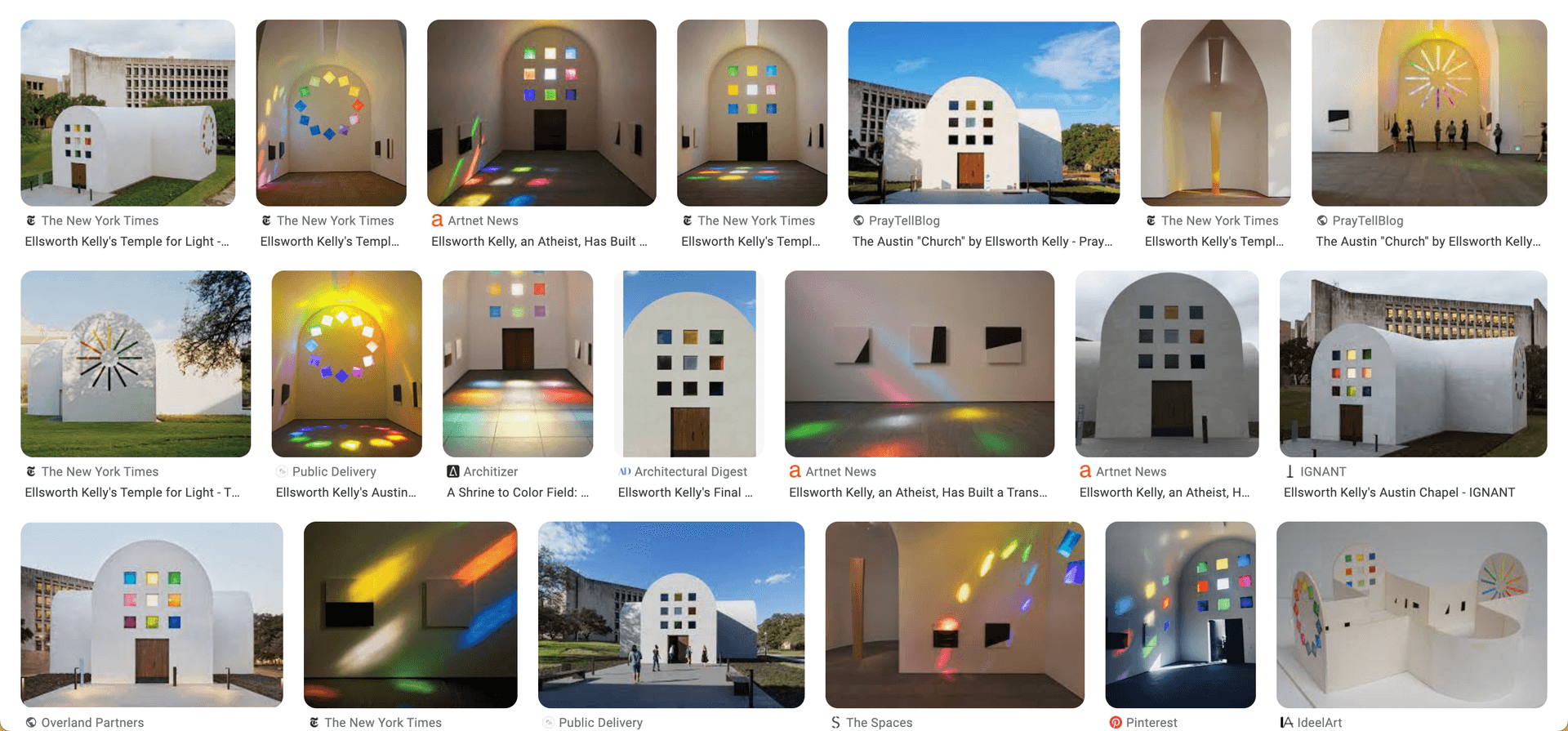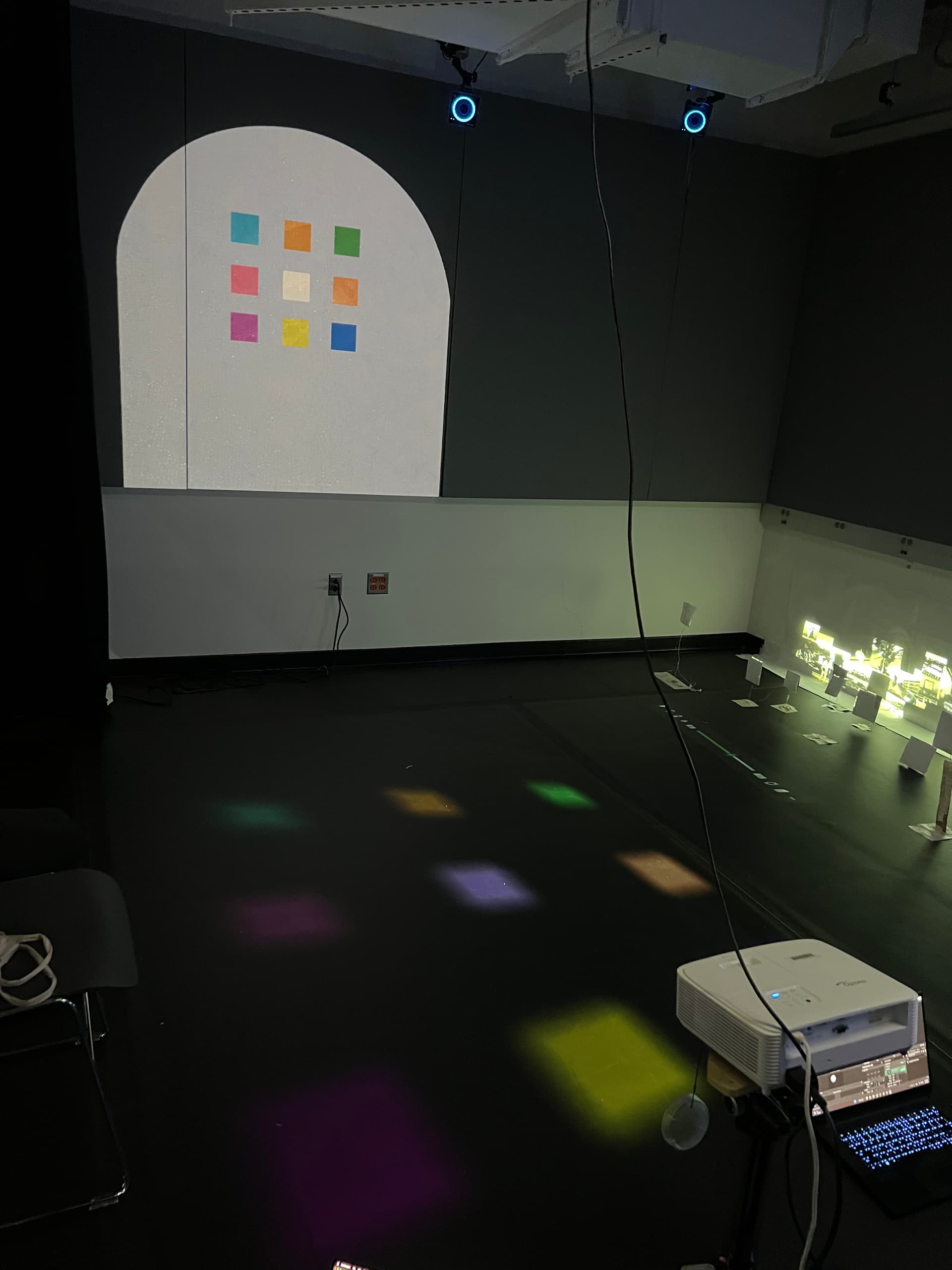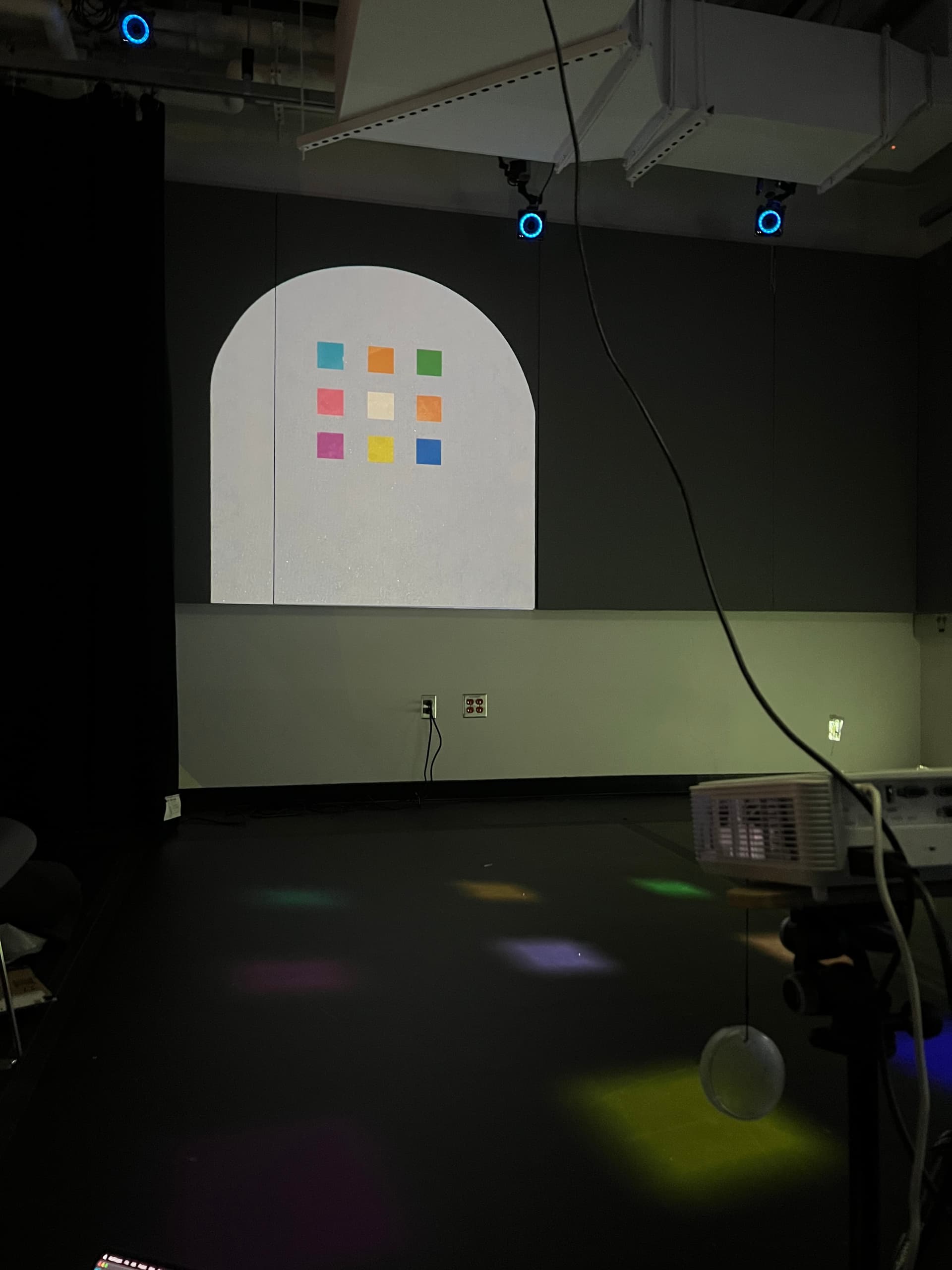
Clubs that want to protect a mysterious reputation tend to hide their entrances in unexpected places — a bookstore, the backyard of an ordinary house, the back of a church. A Secret Place in Austin imagines one of those clubs, cloaked inside Ellsworth Kelly's chapel, and maps it in projection.
Inspiration — Ellsworth Kelly
The project is inspired by American painter Ellsworth Kelly, whose works demonstrate an unassuming technique that emphasizes line, color, and form — often in bright, saturated hues. In Austin, Kelly built what he called a temple for light: translucent colored glass set into the architectural vocabulary of a church. The rose-window grammar is preserved but stripped down into clean blocks, and the moving shadows those panes cast across the floor do not look ecclesiastical — they look like the scattered light of a disco ball.
Concept
That doubled reading — sanctuary and dancefloor — is the whole concept. Pair two things that should not go together (the chapel and the club), and let projection handle the join. The title A Secret Place in Austin pays tribute to Kelly's chapel directly, while smuggling in the idea that the chapel itself could always have been something else.
Process
We used two projectors to stage the effect: one on the wall standing in for the rose window, and one on the floor casting its colored shadow. The main challenge was mapping the shadow with the right geometry and distortion so that the pattern moved like real sunlight through stained glass — a slow, architectural drift, not a loop. MadMapper and a MIDI controller let the projections be animated and cued by hand.
Videos